







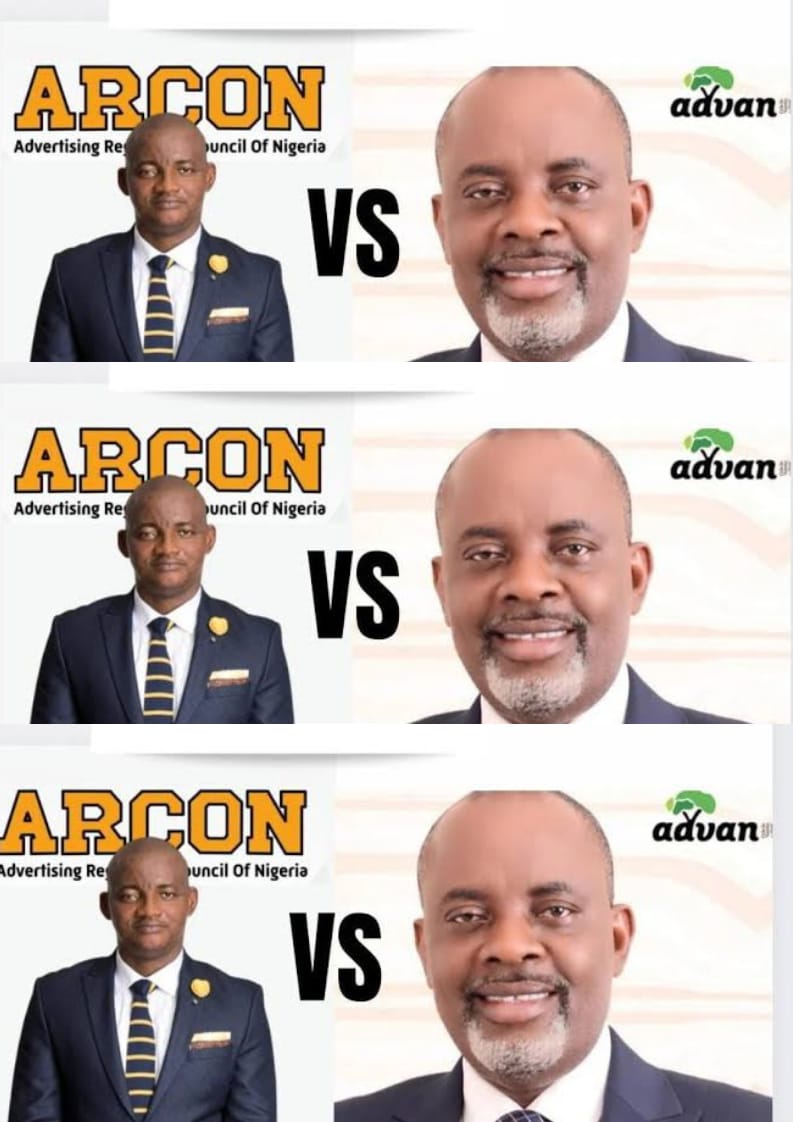
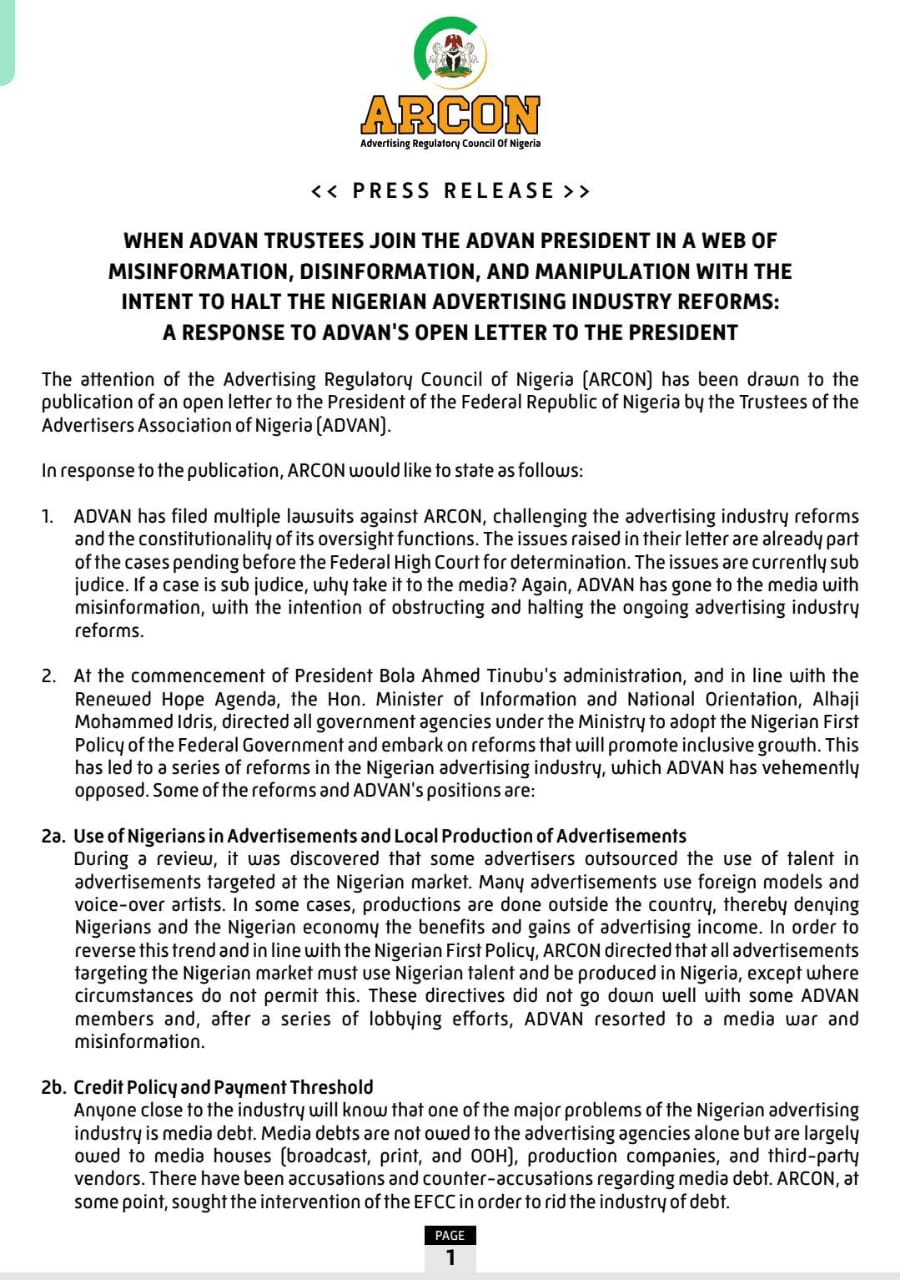
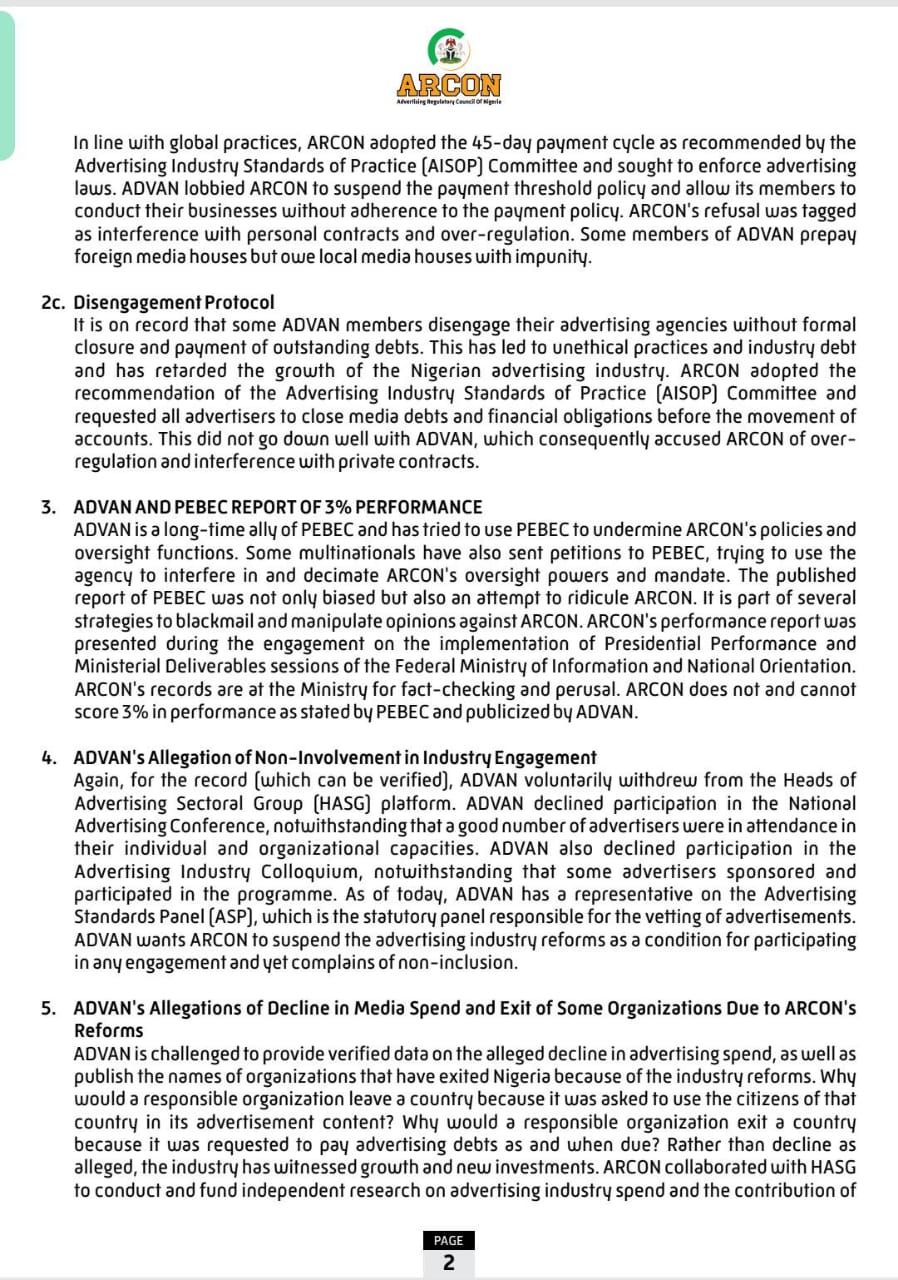
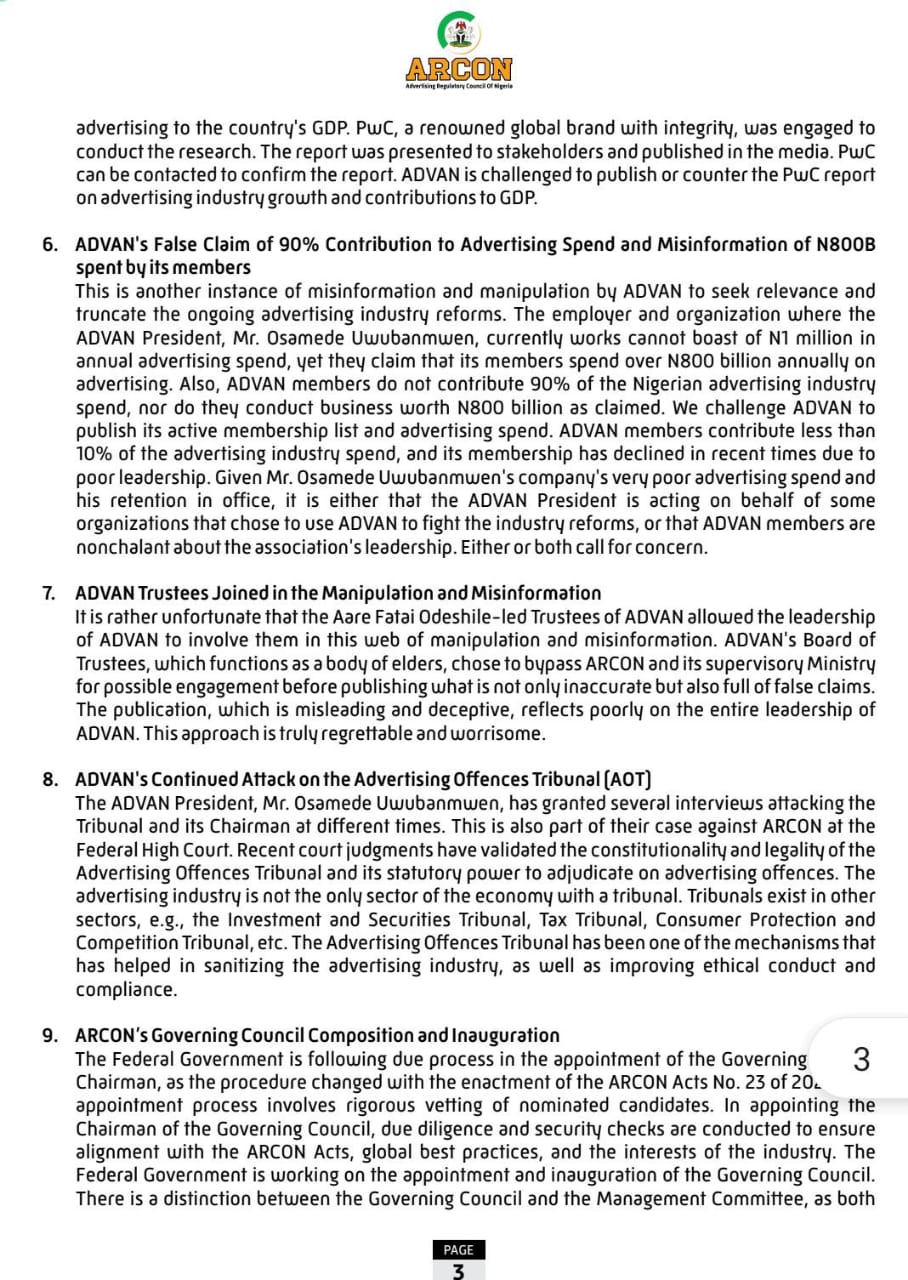
The Advertising Regulatory Council of Nigeria (ARCON) has issued a sweeping and strongly worded rebuttal to an open letter addressed to President Bola Tinubu by the Trustees of the Advertisers Association of Nigeria (ADVAN), accusing the advertisers’ body of waging a calculated campaign of misinformation aimed at halting ongoing reforms in the advertising industry.
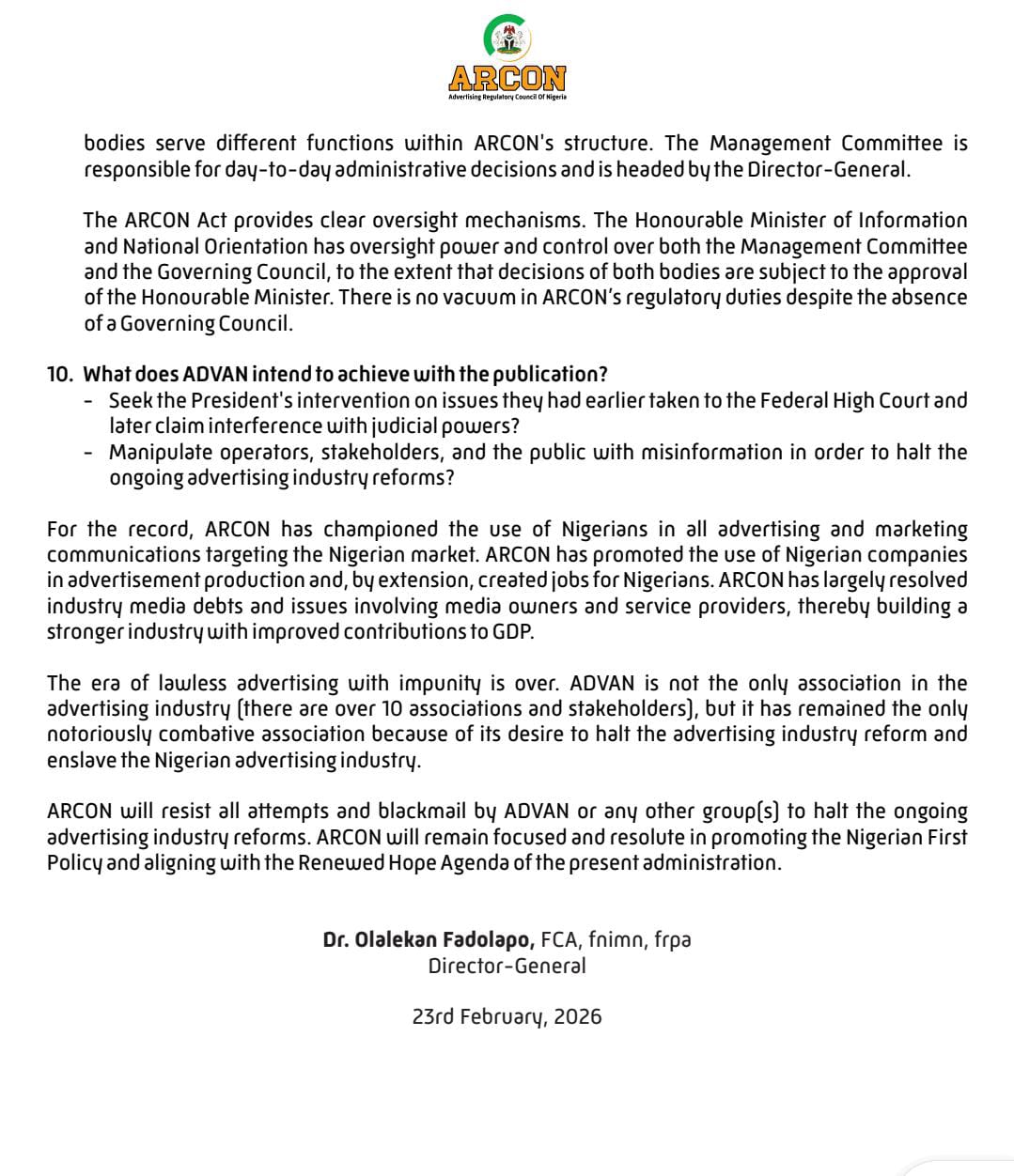
In a comprehensive statement signed by its Director-General, Dr. Olalekan Fadolapo, ARCON said its attention was drawn to the publication of ADVAN’s letter to the Presidency and that it considered it necessary to set the record straight. The Council described the contents of the letter as misleading, inaccurate and deliberately crafted to obstruct reforms that it insists are lawful, policy-driven and aligned with national economic objectives.
ARCON disclosed that ADVAN has instituted multiple lawsuits against the Council at the Federal High Court, challenging both the advertising industry reforms and the constitutionality of ARCON’s oversight powers. According to the regulator, the issues raised in the open letter are already subjects of pending litigation and therefore sub-judice. It questioned why ADVAN chose to escalate the matter in the media when the courts are already seized of the issues, suggesting that the move was designed to influence public opinion and mount pressure to suspend reforms through extra-judicial means.
The regulator traced the origin of its reform programme to directives issued at the commencement of the Tinubu administration. It stated that the Honourable Minister of Information and National Orientation, Alhaji Mohammed Idris, directed agencies under the ministry to align with the Federal Government’s Nigerian First Policy under the Renewed Hope Agenda and to implement reforms capable of promoting inclusive economic growth. ARCON said its actions flow directly from that policy direction.
Among the reforms fiercely opposed by ADVAN, ARCON highlighted its directive mandating the use of Nigerian talent and local production for advertisements targeted at the Nigerian market. According to the Council, industry reviews revealed that some advertisers were outsourcing advertising production abroad and using foreign models and voice-over artists, thereby denying Nigerian professionals and the economy the financial benefits of advertising spend. To curb what it described as capital flight and economic leakage, ARCON directed that adverts intended for the Nigerian audience must be produced locally and must feature Nigerian talent, except in circumstances where such compliance is impracticable. The Council said the directive was met with resistance from certain ADVAN members, who allegedly engaged in lobbying before resorting to what ARCON termed a “media war.”
ARCON also addressed the long-standing issue of media debt, which it described as one of the most serious structural problems confronting the industry. It said debts are owed not only to advertising agencies but also to broadcast stations, print houses, Out-of-Home operators, production companies and other third-party vendors. The regulator noted that, at various times, allegations and counter-allegations regarding unpaid obligations have tarnished the industry’s reputation and hindered growth. In line with global best practice and recommendations from the Advertising Industry Standards of Practice (AISOP) Committee, ARCON adopted a 45-day payment cycle for advertising transactions and moved to enforce compliance. The Council alleged that ADVAN lobbied for suspension of the payment threshold policy and characterised its enforcement as over-regulation and interference in private contracts. ARCON further claimed that while some advertisers prepay foreign media houses, they default on payments owed to local media organisations with impunity.
On disengagement protocols, ARCON stated that it has become common practice for some advertisers to disengage agencies without formal closure of accounts and settlement of outstanding debts, thereby compounding financial instability within the ecosystem. Acting on AISOP recommendations, the Council directed that advertisers must clear media debts and financial obligations before transferring accounts to new agencies. This measure, ARCON said, was also resisted by ADVAN, which accused the regulator of interfering in contractual relationships.
The regulator further accused ADVAN of leveraging its relationship with the Presidential Enabling Business Environment Council (PEBEC) to undermine ARCON’s authority. It rejected a published report allegedly scoring ARCON’s performance at three percent, describing the rating as biased and part of a deliberate attempt to ridicule the council and erode public confidence in its oversight mandate. ARCON maintained that its official performance report was presented during the Presidential Performance and Ministerial Deliverables sessions of the Federal Ministry of Information and National Orientation and is available for verification. It insisted that it neither scored three percent nor performed at such a negligible level.
Addressing allegations that ARCON’s reforms have led to a decline in advertising spend and prompted some organisations to exit Nigeria, the Council challenged ADVAN to provide verifiable data and publish the names of companies that have allegedly left the country because of the reforms. It questioned the logic of attributing corporate exits to requirements such as the use of Nigerian talent or the enforcement of timely debt payments. Rather than a decline, ARCON said the industry has recorded growth and new investments. It cited independent research conducted in collaboration with the Heads of Advertising Sectoral Group (HASG) and executed by global consultancy PwC, which reportedly found positive growth in advertising spend and measurable contributions to Nigeria’s GDP. The regulator invited ADVAN to publicly counter or disprove the PwC findings if it disagrees with them.
ARCON also dismissed ADVAN’s claim that its members account for 90 percent of Nigeria’s advertising expenditure and spend over ₦800 billion annually. The council described the figures as exaggerated and misleading, challenging ADVAN to publish its active membership list and audited advertising spend records. It asserted that ADVAN members contribute less than 10 percent of total industry spend and alleged that the association’s membership has declined in recent times due to what it characterised as poor leadership.
The Council expressed concern that ADVAN’s Board of Trustees, led by Aare Fatai Odeshile, endorsed the publication of the open letter without first seeking engagement with ARCON or its supervising ministry. It described the trustees’ action as regrettable and said the publication reflects poorly on the leadership of the association.
On continued criticism of the Advertising Offences Tribunal (AOT) by ADVAN’s President, Mr. Osamede Uwubanmwen, ARCON maintained that recent court judgments have validated the constitutionality and statutory authority of the tribunal to adjudicate advertising offences. It noted that similar tribunals operate in other sectors of the Nigerian economy, including securities, taxation and consumer protection, and argued that the AOT has helped sanitise the advertising industry and strengthen ethical compliance.
Regarding the composition and inauguration of its Governing Council, ARCON stated that the Federal Government is following due process in accordance with the ARCON Act in appointing a Governing Chairman and council members. It explained that the appointment process involves rigorous vetting, due diligence and security checks to ensure alignment with statutory provisions, global best practices and the broader interests of the industry. The regulator clarified the distinction between the Governing Council and the Management Committee and assured stakeholders that the government is working on the council’s formal inauguration.
The escalating exchange underscores deepening tensions between the industry regulator and one of its most prominent advertiser associations. While ADVAN frames its objections around regulatory overreach and business climate concerns, ARCON insists its reforms are necessary to curb debt culture, promote local content, strengthen compliance and align the advertising sector with national development priorities. With litigation ongoing and public rhetoric intensifying, the dispute now sits at the intersection of legal adjudication, regulatory authority and the future direction of Nigeria’s advertising ecosystem.
Leave A Comment