







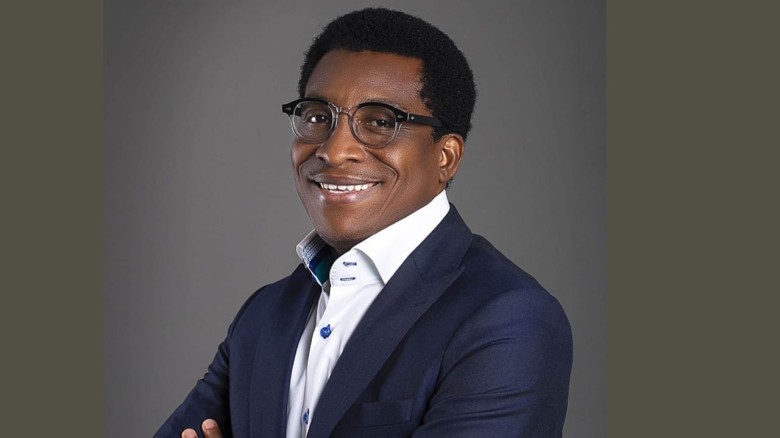
Key Marketing Trends 2026, Ekeno Eyo predicts phenomenal growth
As the global marketing industry transitions from 2025 into a more complex digital future, Ekeno Eyo, Managing Director of Redwolf Company, has outlined the major forces expected to redefine marketing strategy, media investment and brand engagement in 2026.
According to Eyo, retail and commerce media will take centre stage as brands increasingly shift advertising budgets to retail media networks and commerce-led platforms. Citing eMarketer data, he notes that global retail media ad spend was projected to hit $169 billion in 2025, with further expansion expected in 2026. In Nigeria, platforms such as Temu are tipped to emerge as dominant e-commerce players, reshaping how brands connect with consumers at the point of purchase.
Content, Eyo explains, will continue its evolution from storytelling to direct commerce. Shoppable content, already popular on platforms like TikTok will become mainstream, with brands adopting shoppable videos, livestream shopping and integrated commerce experiences. This shift will also extend to connected TV (CTV) and second-screen formats that allow consumers to take immediate product actions.
Artificial intelligence will deepen its influence, moving beyond generative tools to agentic AI systems capable of managing end-to-end marketing processes. From planning and execution to optimisation across SEO, email, social and paid media, these AI agents will operate with minimal human input. While concerns remain within agency circles, Eyo believes this evolution will ultimately favour agencies that adapt quickly.
Search behaviour will also change significantly as AI-powered assistants such as ChatGPT, Gemini and Claude increasingly shape how people discover information. Marketers, he says, will need to optimise content for conversational queries and Q&A-style searches, particularly across voice and AI-driven platforms.
On the investment front, Eyo points to WARC’s updated forecast, which projects global advertising spend to grow by 8.1 per cent in 2026, reaching approximately US$1.27 trillion. This growth will be driven largely by social media and digital channels. However, he warns that while brands are doubling down on digital, expectations around measurable return on investment will intensify.
Measurement frameworks themselves are set for change. As media channels fragment and data signals become more complex, marketers will place greater emphasis on advanced attribution analytics. Media mix modelling (MMM), alongside tools that track creative fatigue and engagement decline, will gain wider adoption.
Experiential marketing will also become more immersive and intelligent. Eyo highlights a shift towards data-driven micro-experiences, smaller, highly tailored brand interactions, combined with seamless “phygital” integrations that merge physical experiences with digital and AI-powered touchpoints.
Packaging, traditionally a functional brand element, will be elevated into a strategic engagement channel. Through QR codes and connected packaging, brands will link physical products to digital stories, gamification features and loyalty programmes, creating continuous engagement beyond the shelf.
Finally, Eyo notes that public relations will increasingly rely on technology as part of crisis preparedness. In an era marked by AI-generated misinformation, cyber threats and geopolitical uncertainty, PR teams will invest more heavily in social listening, sentiment analysis and rapid-response tools to manage reputational risk in real time.
Together, these trends, Eyo concludes, signal a more data-driven, commerce-led and AI-integrated marketing landscape, one that will reward brands and agencies able to combine technology, creativity and accountability in 2026 and beyond.
Leave A Comment