







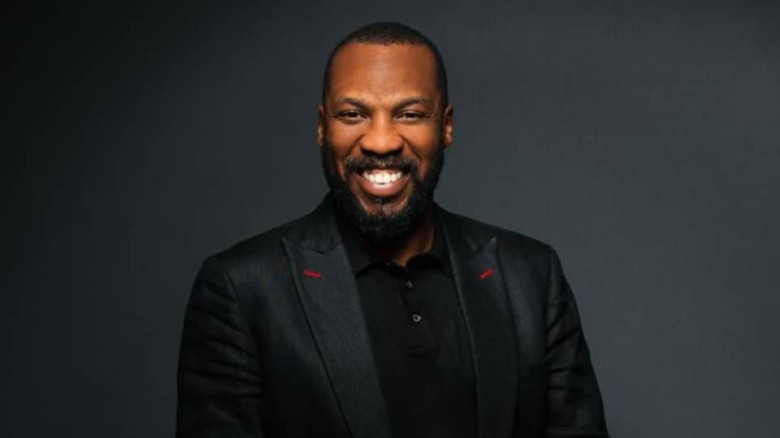
AI Won’t Save Bad Strategy”: Marketing Expert Izu Nwachukwu Sounds Warning to B2B Leaders
As artificial intelligence reshapes global marketing at breakneck speed, digital marketing strategist Izu Nwachukwu is issuing a blunt warning to founders and executives: AI can accelerate growth, but it cannot compensate for weak thinking.
“AI has made production faster and data more accessible,” Nwachukwu says. “But it has also flooded the market with generic content. The real advantage today isn’t access to tools. It’s clarity.”
With more than 19 years of experience spanning Africa, Europe, and the MENA region, Nwachukwu has advised governments, multinational corporations, and high-growth firms on digital transformation and sustainable expansion. He previously held senior roles at global communications firm Edelman and professional networking giant LinkedIn, helping enterprise leaders refine executive positioning and data-driven marketing strategies.Now, he believes many B2B companies are misunderstanding what truly drives growth in the AI era.
In early-stage technology companies, Nwachukwu says, the founder’s personal brand has become a commercial asset, not a vanity project.
“People invest in founders before they invest in products,” he explains. “A strong founder brand accelerates trust, reduces sales cycles, attracts talent, and increases investor confidence.”
In complex B2B environments where decisions carry financial and reputational risk, a visible, credible founder voice can serve as the company’s most effective distribution channel.
As executives rush to increase their presence on LinkedIn, Nwachukwu argues many are using the platform incorrectly.
“LinkedIn is powerful, but too many people treat it like Instagram,” he says. “It’s not about selfies and viral hooks. It’s about authority and insight.”
According to him, the companies seeing real traction are those educating their markets, leading industry conversations, and demonstrating expertise not chasing algorithm trends.
Nwachukwu is particularly critical of what he calls “over-automated lead funnels with zero brand context.”
“Businesses are obsessed with gated PDFs, email sequences, and dashboards,” he says. “But they ignore credibility and positioning. You can automate distribution. You can’t automate trust.”
In his view, automation works only when it amplifies a strong brand foundation. Without that, it merely scales mediocrity.
Contrary to the belief that B2B decisions are purely numbers-driven, Nwachukwu insists storytelling remains essential.
“ROI justifies the purchase. Storytelling justifies the risk,” he says, noting that research shows 87 percent of B2B buyers prefer credible content from trusted industry voices.
Behind every corporate purchase, he explains, lies an unspoken anxiety: Will this decision make me look competent or careless? He calls it “FOMU”, Fear of Messing Up.
“Good storytelling reduces perceived risk. It builds trust before the spreadsheet comes out.”
Nwachukwu also challenges startups that treat brand building as a luxury for later stages.
“Demand generation captures existing demand. Brand building creates future demand,” he says. “If you only focus on demand campaigns, you’re fighting over the same small percentage of buyers already in the market.”
The common startup mantra, we’ll focus on brand once we have revenue is, in his words, “the biggest lie.”
“Brand isn’t a phase. It’s a growth multiplier. Real brand building means mental availability, being the first name that comes to mind when a buying decision happens.”
As AI tools continue to democratize content creation, Nwachukwu’s message to B2B leaders is unequivocal: technology can magnify a strategy, but it cannot create one.
“AI will amplify your strategy,” he says. “It won’t fix a weak one.”
Leave A Comment