




NBC Moves to Update Broadcasting Regulations as Digital Platforms Reshape Industry
The National Broadcasting Commission (NBC) is reviewing Nigeria’s broadcasting regulatory framework as rapid technological changes, digital platforms and evolving audience behaviour continue to challenge traditional approaches to broadcasting regulation.
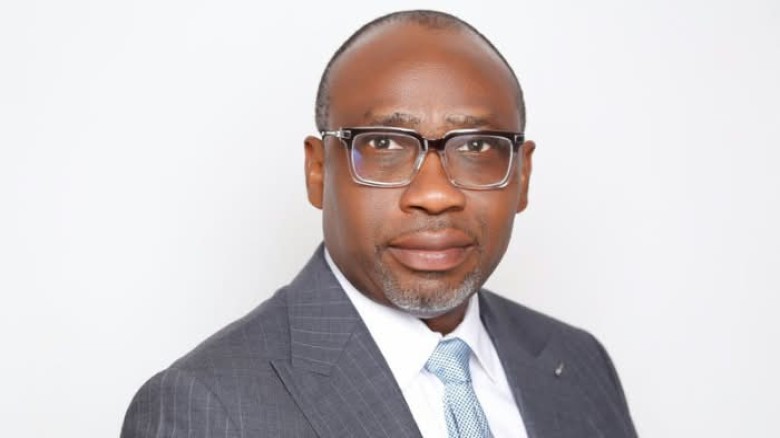
Director-General of the NBC, Dr. Charles Ebuebu, disclosed this while speaking on “Navigating the Airwaves: Digital Transition, Audience Data & Compliance” at the Society of Nigerian Broadcasting (SNB) Lagos October Clinic.
Ebuebu said the transformation of the global media landscape had made it necessary for regulators to rethink existing definitions, regulatory frameworks and approaches to monitoring broadcasters.
According to him, the emergence of new forms of broadcasting and digital platforms has created a complex regulatory environment, particularly around how content is delivered, consumed and measured.
“The media landscape globally is undergoing a rapid transformation in terms of innovation and technology. We have seen the emergence of new kinds of broadcasting that have evolved over time,” he said.
He noted that several regulatory institutions across the world were already amending their broadcasting regulations to reflect changes in technology and audience consumption patterns.
“The definitions before now no longer stand relevant. So the question for regulators becomes: how do you measure this? It has become a challenge, how do you monitor and regulate this?” Ebuebu said.
DSO enters new phase
The NBC Director-General also provided an update on Nigeria’s Digital Switch Over (DSO), describing the transition as a long-running initiative that had now entered a new phase.
He said while the commission had successfully launched DSO in eight states, the initial rollout was largely concentrated in urban centres, limiting its impact in rural communities.
According to him, the NBC subsequently reviewed its approach and identified satellite technology as a way to extend access to digital television across the country.
“We decided to use the satellite, and anywhere you are, you have access. It is free TV. If you have the box and the decoder, you are connected,” he explained.
Ebuebu said the commission was also working to increase the number of decoders available in the market in order to expand access and strengthen the reach of digital television.
He argued that the DSO would ultimately help liberalise Nigeria’s broadcasting space by providing broadcasters with a wider national platform and creating greater opportunities for competition in content.
“We need to liberalise that space and let content be competitive rather than pay for the space and go look for advertisements,” he said.
NBC seeks scientific audience measurement
On audience measurement, Ebuebu stressed the importance of reliable data to the growth of Nigeria’s broadcasting and advertising industries.
He disclosed that First Media had conducted a proof of concept in Lagos, installing measurement panels in selected homes to track what audiences watch and when they watch it.
The initiative, he said, was designed to provide the industry with more scientific audience data that could support investment decisions, particularly within the Free-to-Air television market.
“We need a scientific measurement to be able to get data that will drive investments in terms of advertising in the Free-to-Air media space, as well as bring the necessary data we need to grow the industry,” he said.
He added that credible audience measurement would provide advertisers, broadcasters and other industry stakeholders with the evidence required to make more informed commercial decisions.
Online broadcasting creates fresh compliance challenges
Ebuebu said the rapid growth of online broadcasting and digital platforms had also created significant compliance challenges for the NBC.
According to him, the traditional broadcasting model, where content passed through established editorial structures before reaching audiences, has been disrupted by digital platforms that allow content owners to communicate directly with audiences.
“Things have grown rapidly. A lot has changed. It is direct from the content owners to the audience, with no editorial [filter],” he said.
He expressed concern that many content creators were unfamiliar with the ethics and regulatory expectations governing broadcasting, while some existing broadcasters had also failed to adequately familiarise themselves with the broadcasting code.
The NBC boss said enforcement was often met with public resistance, with regulatory interventions sometimes interpreted as attempts to restrict freedom of information.
“What usually happens is that after monitoring, when there is an infringement, you demand compliance and put in corrective measures. There is a pushback from the public and it is generally perceived like you are trying to stifle freedom of information, which is not the case,” he said.
He noted that the emergence of online broadcasting had made the situation even more complex, requiring the commission to rethink its regulatory approach.
NBC reviewing broadcasting code
Ebuebu disclosed that the NBC had commenced another review of the broadcasting code following developments in the digital media environment.
He said the commission had spent the past few weeks reviewing the existing framework and was yet to make the outcome public because it was still working towards developing a regulatory framework that would be properly disseminated and discussed with stakeholders.
He also revealed that the NBC was working on an online safety broadcasting regulation that would specifically address the rapidly expanding digital broadcasting environment.
According to him, the commission would first identify the various forms of online broadcasting currently operating and the services they provide before developing regulations appropriate to the different platforms.
“We will identify the various forms of online broadcasting that are in place right now and the services they put out there. Then we draw out regulations that guide online broadcasting as well as the traditional [broadcasting space],” he said.
Ebuebu added that some regulations governing traditional broadcasting would also be amended to reflect current realities.
“The kind of regulations we have are inadequate to take adequate steps in terms of maintaining compliance with the scheme of things now. That in itself needs to undergo a change,” he said.
Leave A Comment