







FG Pushes Shared Responsibility in Rebuilding Nigeria’s Global Image
The Federal Government has called on Nigerians across all sectors to take collective responsibility for building, protecting, and projecting the country’s global reputation through transparent communication and demonstrable progress.
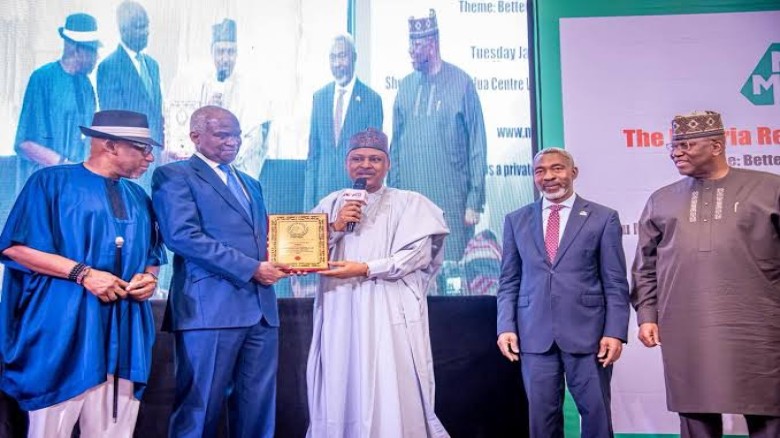
The call was made on Tuesday in Abuja by the Minister of Information and National Orientation, Mohammed Idris, at the Nigeria Reputation Summit 2026, where Nigeria’s first National Reputation Perception Index, developed by the Nigerian Institute of Public Relations (NIPR), was formally unveiled.
Describing the index as a critical diagnostic tool, Idris said it offers a clear assessment of how Nigeria is perceived both at home and abroad. “This report is not a verdict on Nigeria. It is a mirror. As a responsible nation, we must look into that mirror and act,” he stated.
The Minister commended NIPR and the Nigerian Reputation Management Group for producing the index after years of extensive research, noting that national reputation building is a long-term endeavour that demands consistency, discipline, and shared commitment.
While acknowledging that the index currently places Nigeria in a low-trust category, Idris pointed to tangible progress recorded in the last two years under the administration of President Bola Ahmed Tinubu. He noted that although perception often lags behind reality, ongoing reforms and improvements must be communicated more clearly and consistently to both local and international audiences.
Highlighting Nigeria’s democratic credentials, the Minister said the country has enjoyed 27 uninterrupted years of democracy, marked by open political participation and one of the freest media environments globally. According to him, these factors are fundamental to credibility, leadership, and trust; key pillars of national reputation.
On governance and economic reforms, Idris referenced measures aimed at strengthening local government autonomy, enhancing security through community-focused initiatives, removing fuel subsidies, and unifying the foreign exchange system. He described the reforms as difficult but necessary decisions, adding that inflation is easing, economic growth is stabilising, and foreign reserves are showing improvement.
The Minister also drew attention to sustained investments in infrastructure, healthcare, education, agriculture, and youth-focused innovation programmes, including student loan schemes and venture funding initiatives designed to empower young entrepreneurs.
Addressing persistent negative narratives about Nigeria, particularly allegations of religious intolerance, Idris dismissed such claims as misrepresentations of the country’s reality. “Nigeria is not a nation of intolerance. We are actively correcting false narratives through diplomacy, improved security measures, and strategic engagement with our partners,” he said.
He concluded by stressing that shaping Nigeria’s global reputation cannot be the sole responsibility of government, calling on citizens, institutions, professionals, and the private sector to work collaboratively in projecting a more accurate and credible national image.
Leave A Comment