






RED Group Champions Data-Driven Consumer Insights To Deepen Brand Impact
Could you introduce yourself to our audience?
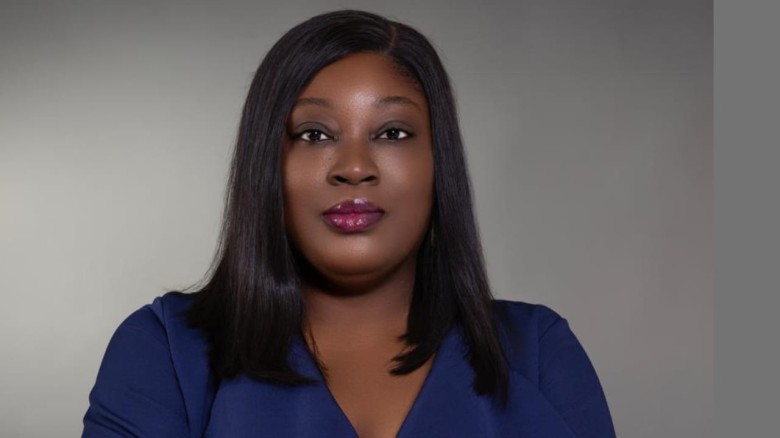
My name is Ayodeji Razaq. I am the Group CEO at RED.
Could you walk us through your career journey and professional trajectory?
I have always been in marketing and storytelling throughout my life. I started out as a BlackBerry Youth Marketing Executive in 2009, and I have been telling stories ever since.
At BlackBerry, the work was simple: to create experiences and opportunities for people and brands to interact on a granular level, in such a way that the brand could connect with students on campuses in the most authentic form. After that, I moved into the digital marketing space. I joined an e-commerce firm called Buyology.com where I built and expanded my digital marketing capacity. I then took those learnings and joined an experiential marketing agency, Brandlife.
At Brandlife, I managed technology portfolios, leading projects for brands such as HP, Intel, Microsoft, Lenovo, and others. My technology background from BlackBerry allowed me to transition easily into this role. Brandlife, being a core experiential agency, gave me the platform to execute experiential marketing at a grand scale.
After leaving Brandlife, I went on to set up my own group of agencies, Riquesa, Flipside, and SBX under The People Company, alongside my partner. In 2022, I joined RED as the Group CEO, once again pivoting into PR and storytelling.
You have built an impressive track record across various facets of marketing communications. What inspired the vision and philosophy behind RED?
I did not found RED. The founders are Adebola Williams and Chude Jideonwo. What I do know is that the vision was clear from the beginning: to create an organization that could speak to young people with the voice of young people.
From day one, RED’s vision has been consistent. We understand what the streets are saying and how young people think, not just in 2020 or in a particular era, but across generations. This is because we are constantly innovating, staying on top of the pulse of every situation that concerns young people.
When the foundation for RED was being laid, the goal was simple but bold: Why not build an organization that, twenty years from now, would still be innovative and able to speak to young people in the right way? An organization that could always be the voice of young people in the room.
If you look at our projects over the years, RED has consistently championed causes that matter. For instance, we played a key role in the Not Too Young to Run Bill. The Enough is Enough movement began from an open letter written by Chude Jideonwo to the President at the time, which grew into a national campaign.
The RED ecosystem has always been the energy behind many catalytic youth-driven projects in Nigeria. The Future Awards, for example, is often described as the “Nobel Prize for Young Africans.” Now in its 20th year, it has inspired several other youth awards across the continent and continues to be a platform for celebrating young African leaders.
Through Statecraft, our governance and political communications arm, we pioneered youth-led political strategy in Africa. Statecraft has been instrumental in driving campaigns for leaders such as the late Muhammadu Buhari in Nigeria, Nana Akufo-Addo in Ghana, and Macky Sall in Senegal.
At the heart of all this is one truth: RED understands how young people speak and what they care about. That foundation is what has shaped RED into what it is today, an organization at the forefront of change across Africa, especially when it comes to youth.
From your experience, what do you find most challenging about truly understanding and engaging with young people?
I think for a lot of people who try to speak to young people, the conversation is often driven by assumptions and what we think we know from social media. For example, I often hear people say that young people have short attention spans and you need to tell them everything quickly before you lose them. That’s not true.
Young people still watch long series. Back in the day, when we were younger, shows aired once a week, think of Game of Thrones. But young people today don’t want to wait that long. It’s not that they lack patience, it’s that content is now more available. They want to consume it on their own terms, whether long-form or short-form, as long as it’s exciting. They’ll binge 22 episodes in two days if it captivates them.
This tells us that people are not consuming less, they’re actually consuming more. The difference is, they want to consume what they want, when they want it. And it’s the same when we talk to young people. The mistake many brands make is assuming we understand them just by looking at surface-level social media data.
At RED, we go deeper. We use proprietary tools to measure cultural intelligence and track how culture interacts with data. That’s how we see the real picture: young people are still listening, but they only listen to the voices they care about. There’s a lot of noise today, unlike before when choices were fewer. Now, they choose which voices to give attention to and only those that matter to them.
So, the real question becomes: How do we carry the message across in a way that matters? You can run a campaign for months, but are young people actually listening? Does it matter enough to them? Does the story resonate? That’s the hard part.
For us at RED, that’s the sweet spot, finding where culture and data intersect. If you can land in that sweet spot, you’ve hit the jackpot. That’s what we strive for in all our projects.
In today’s landscape, where does authenticity fit into brand communications, and to what extent should brands strive to be authentic across all their messaging?
One thing we are learning in this new era of consumption is that brands are trying to humanize without actually thinking like humans. This is one of the dangers of AI-driven knowledge. AI is data-driven, but there’s a human factor that many brands eliminate in the bid for precision.
This is where authentic modeling comes in. Let me give an example. A few days ago, I witnessed a situation where a brand, while engaging with someone, unintentionally came across as disloyal. The brand itself wasn’t disloyal, but that was the perception. And I realized something important: perception now matters more than reality. In fact, perception has become a stronger currency than reality.
The truth is, you can’t build perception with facts, you build it with imagery and authenticity. Take the Igbo apprenticeship model, for example. If I come to you today and say: trust me, if you stay with me for the next ten years, I will reward you with XYZ to start a life of your own, at some point in that journey, you’ll begin to sense whether I’m the kind of person who keeps my word. You won’t just believe what I said, you’ll perceive my character through my actions over time.
That’s exactly what brands have to become today: entities that people can look at and say, yes, they stay true to what they say, even when it’s difficult. If a brand says, our product will make you healthier, people don’t just want to hear it, they want to experience consistent proof of it. Consumers now crave authentic realities.
This is why brands must go beyond storytelling. They have to become human storytellers, to not only say I am what I claim to be, but to show it over and over again. Trust is not built in a moment; it’s built through consistent showing up, even in the smallest things.
Why do brands need to show up at critical moments? Because it signals that they care. But here’s the difference: it’s not enough to care once. The real question is, are you a brand that truly cares, consistently? Because people can tell.
Today, consumers are not just experiencing brands; they are perceiving them. And at RED, our work is to help brands answer this question: how can people perceive you correctly?
Leave A Comment